
Introduction
A brain tumour develops when abnormal cells grow in or around the brain. It may be benign (non-cancerous) or malignant (cancerous). Although some brain tumours grow slowly, others may grow more rapidly and require prompt medical attention.
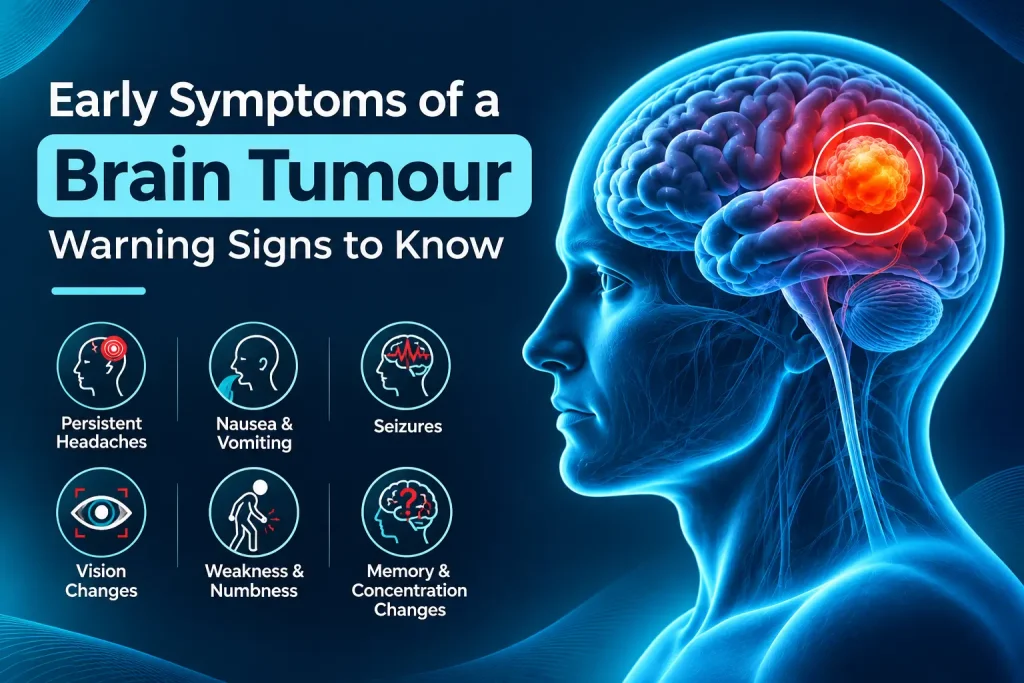
Recognising the early symptoms of a brain tumour can help patients seek timely evaluation and receive an appropriate diagnosis. Common brain tumour symptoms may include persistent headaches, seizures, vision changes or weakness. However, experiencing these symptoms does not automatically mean that a person has a brain tumour, as many common conditions can cause similar symptoms.
The early warning signs of a brain tumour often depend on the tumour’s size, location, growth rate and the areas of the brain it affects.
What Are the Common Early Symptoms of a Brain Tumour?
The early symptoms of a brain tumour can vary from person to person. Some people develop gradually worsening symptoms, while others may experience changes related to the specific area of the brain affected.
Some people may experience headaches alongside nausea, vomiting or neurological symptoms. The pattern of the headache alone cannot confirm a brain tumour.
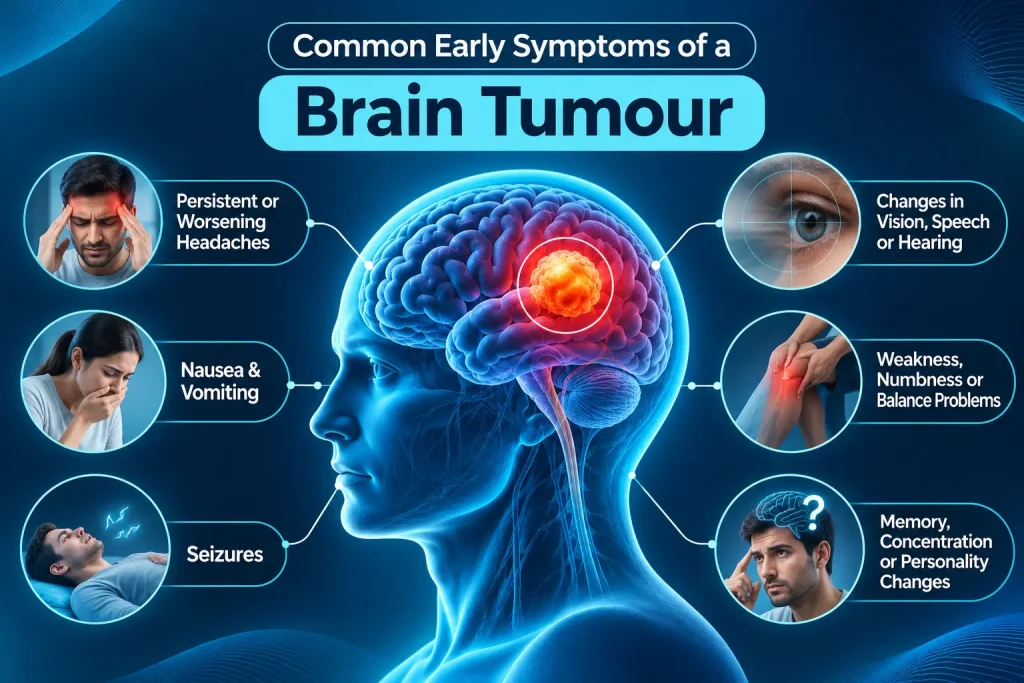
- Persistent or worsening headaches
Headaches are common and usually have causes unrelated to brain tumours. However, a headache that is new, persistent, progressively worsening or noticeably different from previous headaches deserves medical evaluation.
Some people may experience headaches alongside nausea, vomiting or neurological symptoms. The pattern of the headache alone cannot confirm a brain tumour.
- Nausea and vomiting
Unexplained, recurrent nausea or vomiting, especially when accompanied by worsening headaches or neurological changes, may require further investigation. These symptoms can sometimes occur when a tumour increases pressure inside the skull.
- Seizures
A seizure may be one of the first noticeable signs of a brain tumour in some patients, including those who have never experienced seizures before.
A first seizure requires urgent medical assessment. If a seizure lasts five minutes or longer, repeats without recovery, or causes breathing difficulties, seek emergency assistance.
- Changes in vision, speech or hearing
Depending on the tumour’s location, a person may experience blurred or double vision, reduced peripheral vision, difficulty finding words, speech problems or changes in hearing.
Sudden loss of vision or sudden difficulty speaking should be treated as a medical emergency rather than waiting for a routine appointment.
- Weakness, numbness or balance problems
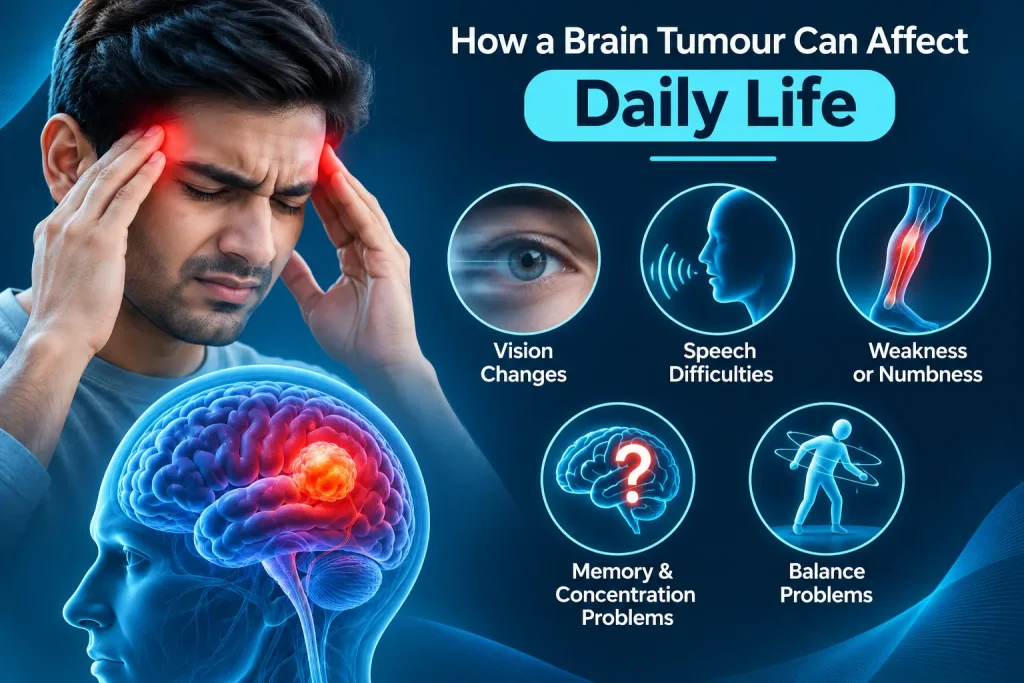
A brain tumour may affect the areas responsible for movement, sensation and coordination. Possible brain tumour symptoms include weakness in an arm or leg, numbness, difficulty walking or unexplained balance problems.
New or progressively worsening neurological symptoms should be assessed promptly to determine their cause and the appropriate treatment.
- Memory, concentration or personality changes
Some patients may notice increasing forgetfulness, difficulty concentrating, confusion or changes in behaviour. These symptoms can have many causes, so a proper medical assessment is necessary to identify the underlying problem.
How Is a Brain Tumour Diagnosed?
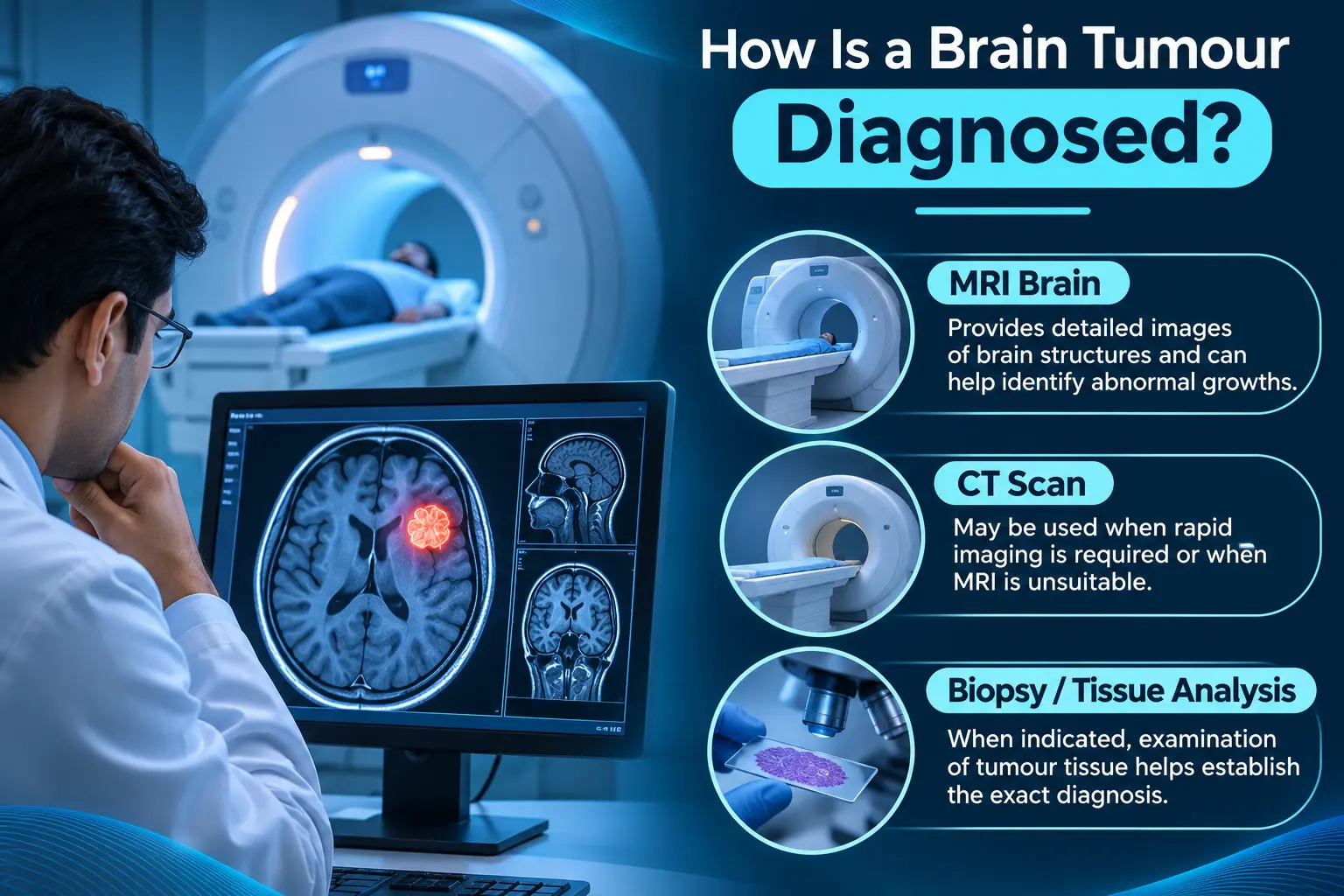
Brain tumour diagnosis involves evaluating the patient’s symptoms, medical history and examination findings. A neurosurgical evaluation may include a detailed medical history, neurological examination and brain imaging.
– MRI brain: Provides detailed images of brain structures and can help identify abnormal growths.
– CT scan: May be used when rapid imaging is required or when MRI is unsuitable.
– Biopsy or tissue analysis: When indicated, examination of tumour tissue helps establish the exact diagnosis.
Not every suspected tumour requires immediate surgery. Treatment depends on the diagnosis, tumour characteristics, symptoms and the patient’s overall health.
When Should You Consult a Neurosurgeon?
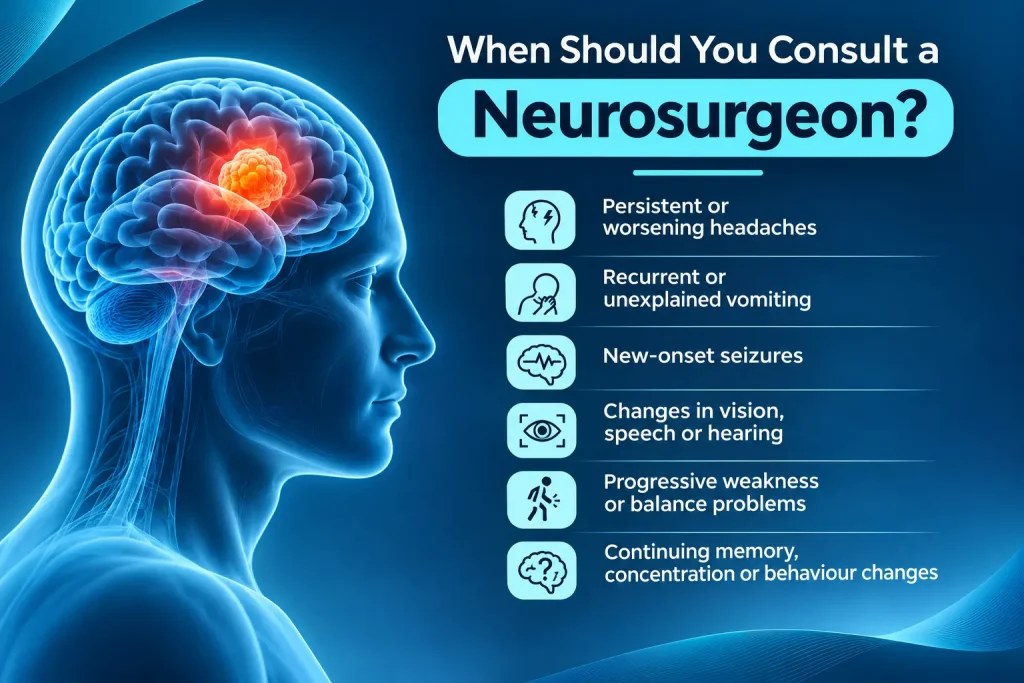
Arrange a medical consultation if you experience persistent or worsening headaches, recurrent unexplained vomiting, new seizures, progressive weakness or continuing changes in vision, speech, memory or balance.
Seek emergency care for sudden severe headaches, sudden weakness, difficulty speaking, loss of consciousness or a first seizure with concerning features.
Frequently Asked Questions
Can a brain tumour develop without symptoms?
Yes. Some brain tumours are discovered incidentally during scans performed for another reason, particularly when they are small or grow slowly.
Are all brain tumours cancerous?
No. Brain tumours may be benign or malignant. However, even a benign tumour can cause serious problems if it presses on critical brain structures.
Can headaches alone indicate a brain tumour?
Usually, headaches have other causes. A persistent, worsening or unusual headache, particularly with neurological symptoms, should be evaluated.
Conclusion
Recognising the early symptoms of a brain tumour can help patients seek appropriate medical attention without unnecessary delay. Common brain tumour symptoms may have several possible causes, and the right diagnosis depends on a detailed clinical assessment rather than symptoms alone. Recognising the early symptoms of a brain tumour can help patients receive appropriate medical attention without unnecessary delay. The right diagnosis depends on a detailed assessment rather than symptoms alone.
At NeuroNest Clinic, Jaipur, Dr. Amit Chakrabarty provides specialist neurosurgical evaluation for brain and spine conditions, with treatment planning based on each patient’s individual needs.
Call +91 81144 67316 or visit NeuroNest Clinic’s website – https://neuronest.clinic/


